ADJUMANI REDUCES HIV CASES FROM 400 TO 225.
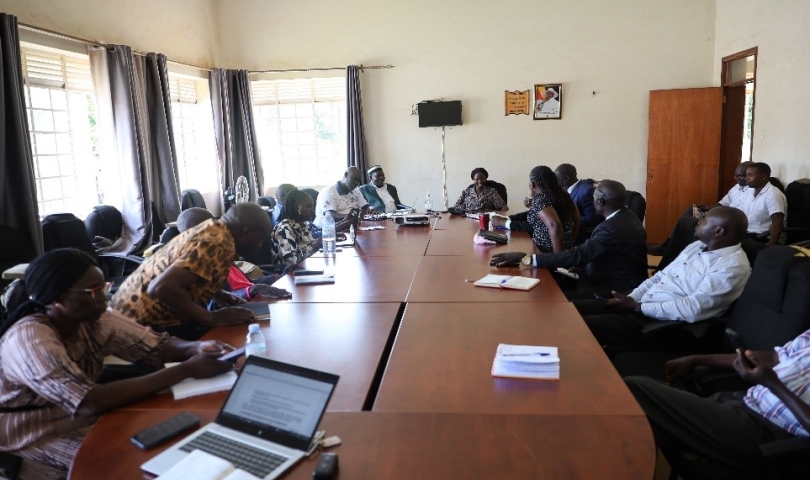
By Bazio Doreen.Adjumani District Local Government has intensified efforts to combat HIV/AIDS following new data showing that women and young people account for the majority of new HIV infections recorded in the district, despite significant progress in reducing overall transmission rates.The concern emerged during a district stakeholders' engagement on HIV/AIDS that brought together government leaders, health workers, development partners, civil society organizations, and representatives of people living with HIV to review progress and strengthen strategies aimed at achieving Uganda's goal of ending HIV/AIDS as a public health threat by 2030.According to the District HIV/AIDS Focal Person, Inyani Dolorence, Adjumani has reduced annual new HIV infections from more than 400 cases in previous years to 225 cases currently, demonstrating the impact of sustained investments in prevention, testing, treatment, and community awareness programmes.However, she noted that the latest data reveals that women and young people remain disproportionately affected."Out of the 225 new HIV infections registered in the district, 65 percent are among women and girls, while 30 percent are among young people aged 15 to 29 years. This calls for targeted prevention interventions focusing on these vulnerable groups," Inyani said.The district data mirrors national trends. According to the Uganda AIDS Commission, Uganda reduced annual new HIV infections from 96,000 in 2010 to approximately 37,000 in 2024, while AIDS-related deaths declined from 56,000 to 20,000 during the same period. The country has also made substantial progress towards the UNAIDS 95-95-95 targets, with 94 percent of people living with HIV aware of their status, 90 percent on treatment, and 96 percent of those on treatment achieving viral suppression.Despite these gains, national statistics continue to show that women and girls carry a disproportionate burden of new infections. Recent reports indicate that women account for approximately two-thirds of new HIV infections in Uganda, with adolescent girls and young women remaining among the most vulnerable populations.Within Adjumani District, Adjumani Town Council registered the highest number of new infections at 67 cases, prompting district leaders to call for enhanced community mobilization and targeted prevention campaigns.The Chairperson of People Living with HIV/AIDS in Adjumani District, Opi Leonard, emphasized the importance of retaining clients in care and strengthening community support systems to ensure that people diagnosed with HIV remain on treatment.He noted that cases of treatment interruption continue to undermine efforts to eliminate mother-to-child transmission and reduce new infections.Stakeholders also discussed the unique challenges facing border districts such as Adjumani, including population mobility, refugee movements, and difficulties in tracking clients who relocate across international borders.Apio Ruth Sharon Baru urged stakeholders to strengthen community education and behavioral change communication, observing that many young people no longer perceive HIV as a major threat.She emphasized the need for sustained awareness campaigns to ensure communities understand that while treatment is available, prevention remains the most effective strategy for ending new infections.Speaking at the engagement, Adjumani Resident District Commissioner, Toko Swaib, reaffirmed government commitment to ending HIV/AIDS and called upon all sectors to play an active role in the response."The fight against HIV/AIDS is a collective responsibility. It cannot be left to the health sector alone. Every government department, institution, community leader, family, and individual has a role to play if we are to achieve the national target of ending HIV by 2030," he said.Uganda currently records an estimated 100 new HIV infections every day, according to the Uganda AIDS Commission, underscoring the need for sustained prevention efforts, especially among women, youth, and other vulnerable populations. National HIV prevalence among adults currently stands at approximately 4.9 percent.The stakeholders' meeting concluded with a renewed commitment to strengthen HIV prevention, testing, treatment adherence, and community awareness programmes across Adjumani District. Particular emphasis was placed on empowering women and young people with accurate information, expanding access to prevention services, and improving follow-up mechanisms for people living with HIV.District leaders expressed confidence that with continued government leadership, community participation, and support from development partners, Adjumani can contribute significantly to Uganda's national aspiration of ending HIV/AIDS as a public health threat by 2030.END.